Cannabis and pets: Inside the rise of THC-related veterinary emergencies
Veterinary ERs are seeing more THC-related cases. Learn how pets are exposed and what owners should know.
Cannabis is in more homes than ever, and veterinarians are seeing the consequences firsthand. Emergency hospitals are treating a growing number of pets exposed to THC, often because of how and where products are stored. Veritas Veterinary Partners pulled together hospital case data, search behavior, and real owner experiences to give a clear picture of what's happening and what it means for the pets coming through your doors.
Key takeaways
- Cannabis pet toxicity cases at veterinary hospitals in the Veritas network doubled from 2021 to 2025, rising from 51 to 102.
- Vermont leads the nation with 361 cannabis-pet searches per 100K residents, followed by Washington, D.C. (353) and Alaska (266).
- Nearly half of pet owners whose animals ingested cannabis (47%) turned to AI chatbots for guidance.
- 1 in 3 pet owners never sought professional vet care after their pet ingested cannabis.
- 38% of pet owners admitted they were too embarrassed to tell their vet their pet had ingested cannabis.
- Half of all pet owners can't identify a single symptom of cannabis toxicity in pets.
- 51% of pet owners have never noticed pet-safety warnings on cannabis packaging.
- 46% of Americans believe cannabis legalization has increased the risk of pet exposure.
Cannabis toxicity cases are rising across veterinary hospitals
Cannabis-related emergencies are no longer isolated incidents. They're becoming a consistent part of the caseload in veterinary ER settings.
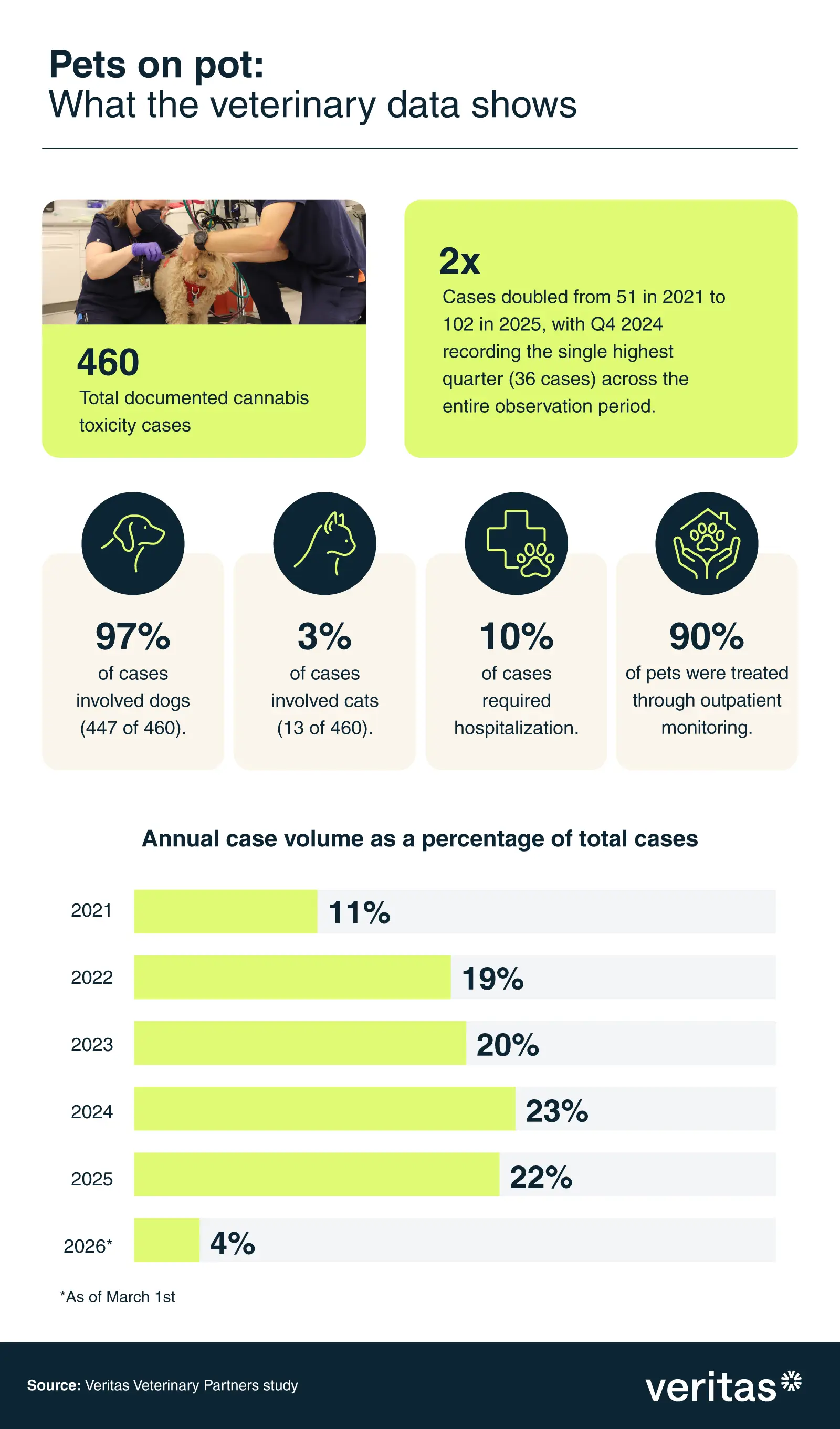
A total of 460 cannabis pet toxicity cases were documented across seven veterinary hospitals from January 2021 through March 2026. The data showed a clear upward trajectory, with cases doubling from 51 in 2021 to 102 in 2025.
Quarterly trends revealed spikes in exposure, with Q4 2024 recording the highest single-quarter volume at 36 cases. While 2025 maintained elevated levels at 102 cases, early 2026 data suggested continued activity, with 18 cases in Q1 alone—placing the year on pace for approximately 72 cases if trends hold.
Dogs accounted for 97% of all incidents (447), compared to just 3% involving cats (13). Most exposures did not require hospitalization, but 10% did. The remaining 90% were managed through outpatient monitoring and supportive treatment.
Where pet owners are searching and what it reveals
Search behavior offers a window into how pet owners respond in moments of uncertainty. It also shows their curiosity or concern for cannabis with their pets.
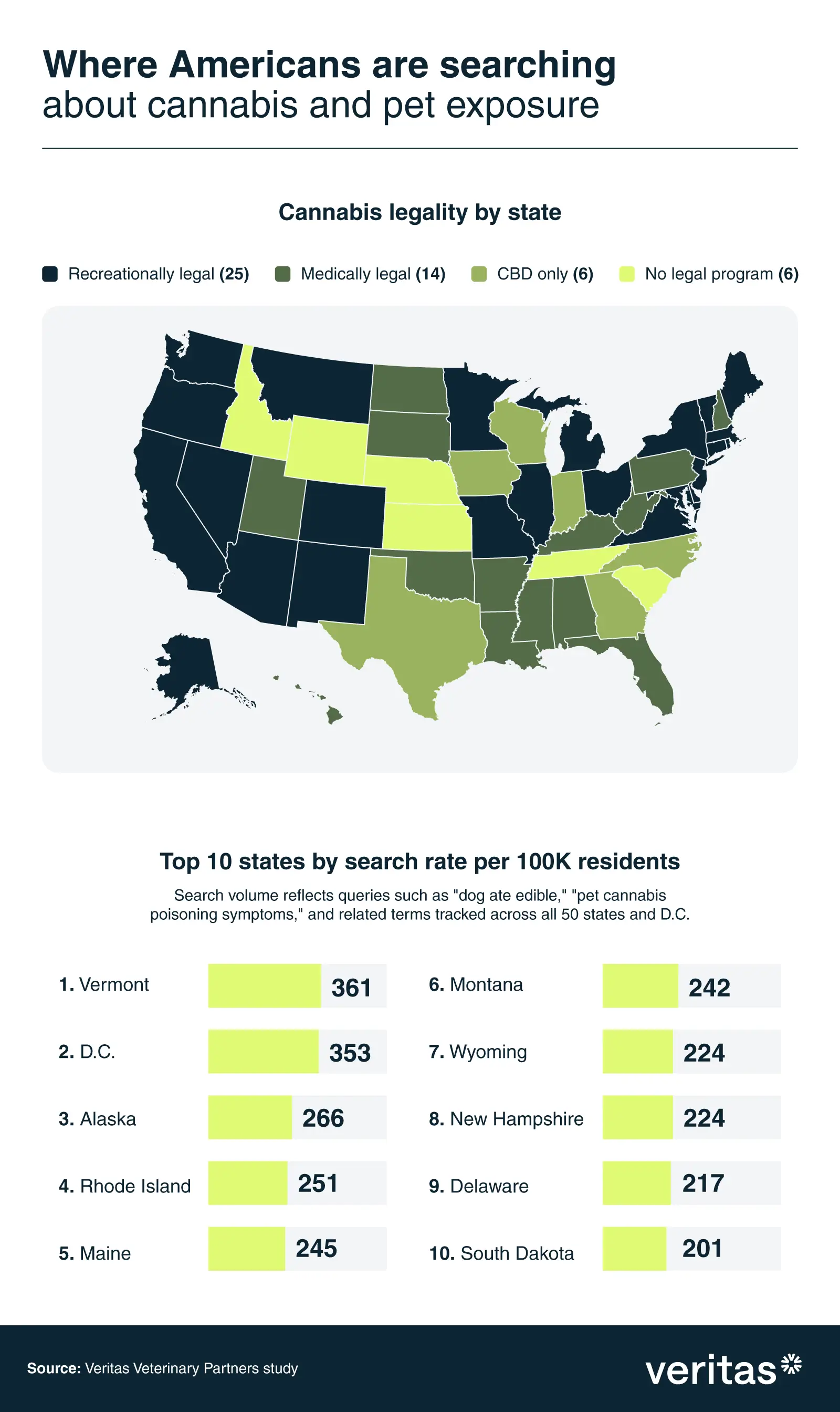
Vermont recorded the highest rate of cannabis-related pet searches, with 361 searches per 100,000 residents, followed closely by Washington, D.C. (353) and Alaska (266). The national median was 113 searches per 100,000 residents, indicating that concern is widespread, even in regions outside the top-ranking areas.
States with established recreational cannabis markets, including Oregon (145), Colorado (121), and Nevada (137), clustered in the upper-middle range rather than at the top. At the same time, states with newer or no recreational legalization still showed substantial search activity, reinforcing that cannabis exposure risk is not limited by policy boundaries.
Despite ongoing concerns, every state saw a year-over-year decline in search volume, ranging from a modest -2.6% in Delaware to a sharper -27.8% in California. This pattern suggests that, while awareness is increasing, reliance on search engines during emergencies is shifting.
How exposure happens at home and beyond
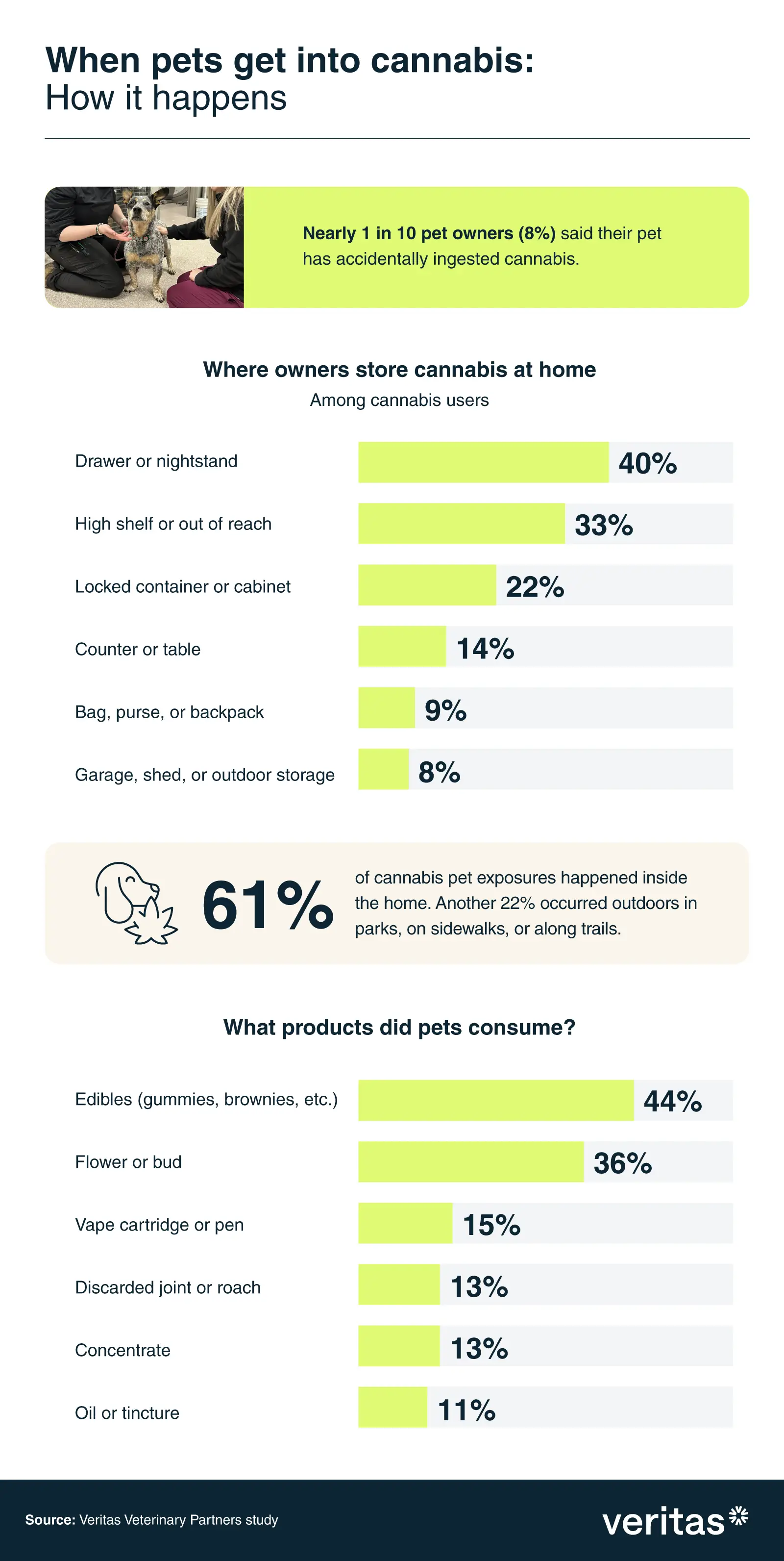
Eight percent of pet owners reported that their pet had accidentally ingested cannabis, while another 2% were unsure. Among cannabis users, storage practices varied, with 40% keeping products in a drawer or nightstand and 33% using a high shelf, locations that may still be accessible to determined pets. Only 22% reported using a locked container.
Edibles were the most commonly consumed form, accounting for 44% of exposures, followed by flower or bud at 36%. Most incidents occurred inside the home (61%), though 22% took place outdoors in areas like parks, sidewalks, or trails, where discarded products may be present.
Owner decisions during an exposure event can shape outcomes and often involve uncertainty or hesitation.
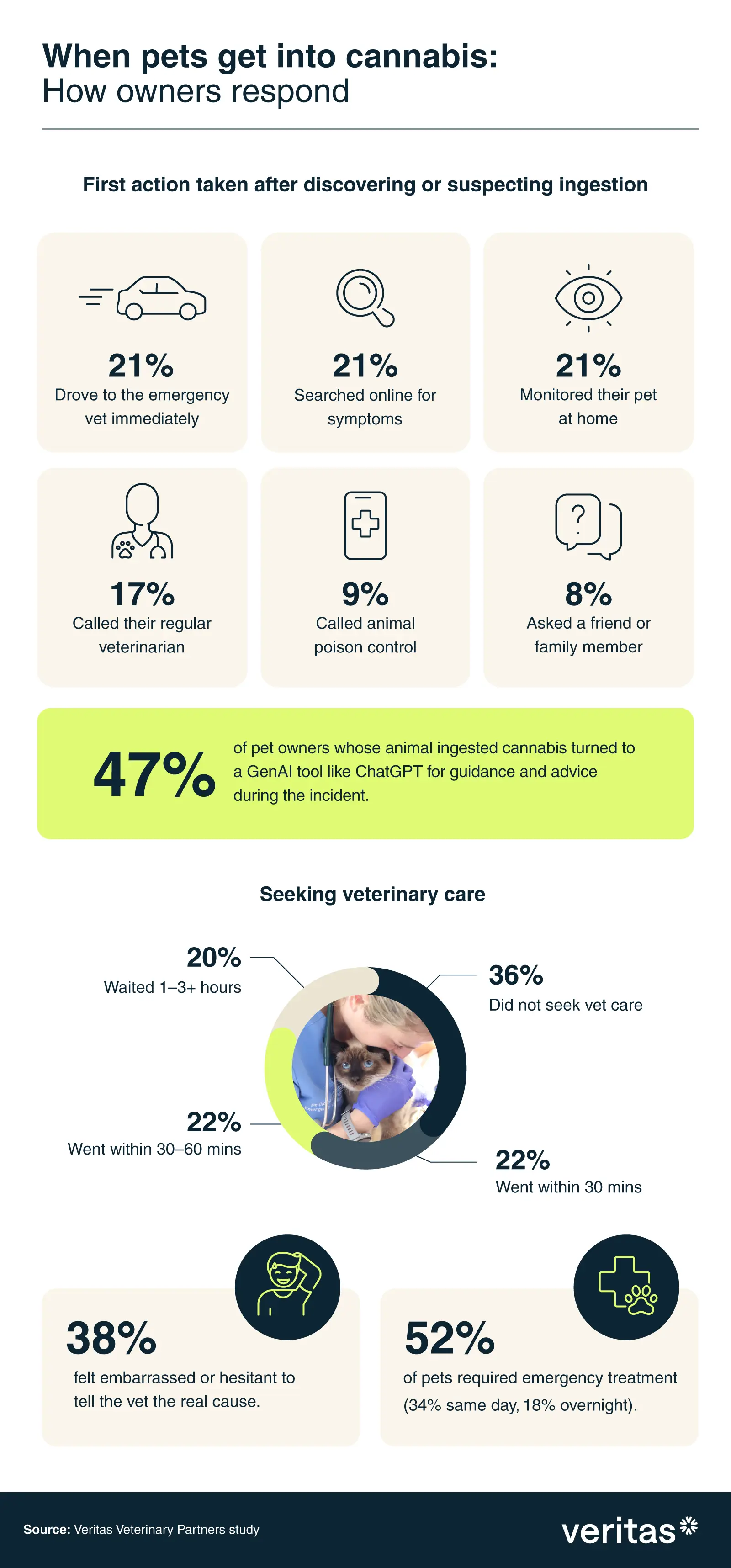
Responses to cannabis exposure were evenly split:
- 21% of pet owners drove to an emergency veterinarian immediately.
- 21% searched online for symptoms.
- 21% choose to monitor their pet at home.
Notably, 47% of those whose pets ingested cannabis used generative AI tools such as ChatGPT, Gemini, or Claude for guidance during the situation.
A significant portion of owners did not seek professional care, with 36% reporting that they never contacted a veterinarian. Among those who went to the vet, 38% said they felt embarrassed or hesitant to disclose the true cause of their pet’s symptoms, and an additional 7% admitted to downplaying details.
More than half of affected pets required emergency treatment: 34% were treated and released the same day, and 18% required overnight hospitalization. Following these experiences, 25% of owners reported quitting cannabis entirely.
Understanding of cannabis toxicity remains limited, even as exposure risk increases.
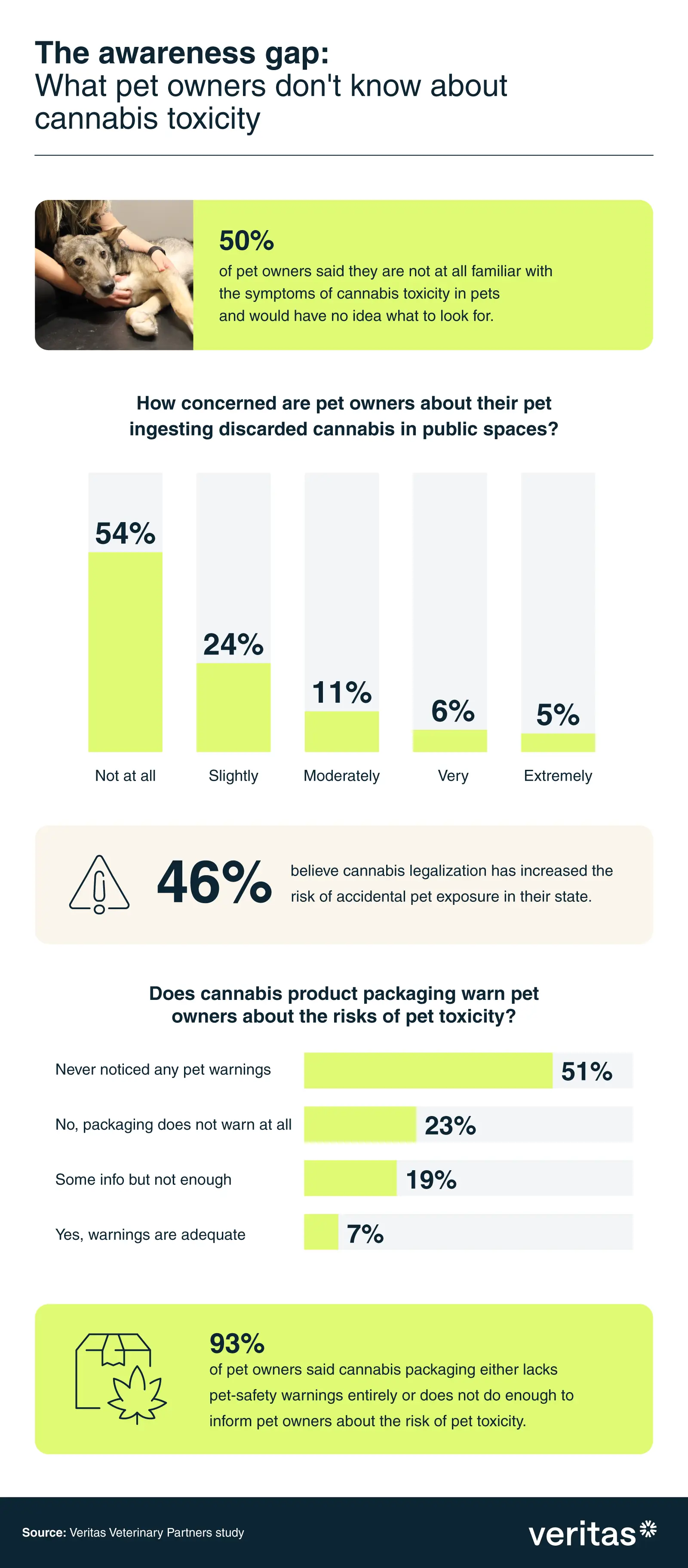
Half of pet owners reported no familiarity with cannabis toxicity symptoms, while only 9% described themselves as very familiar. Concern about exposure in public spaces was also low, with 54% not at all concerned and just 11% expressing great concern.
Nearly half of respondents (46%) believed legalization has increased the risk of accidental pet exposure, while 30% disagreed. Women were more likely to view legalization as increasing risk compared to men (50% vs. 41%).
Packaging awareness also remains a challenge. A large majority of pet owners (93%) said cannabis packaging either lacks pet-safety warnings or does not go far enough, including 51% who had never noticed any warnings. Only 7% believed current labeling is adequate.
Familiarity also differed by generation and usage. Baby boomers were the most likely to report zero familiarity with toxicity symptoms at 63%, compared to 39% of Gen Z. Daily cannabis users showed higher awareness, with 21% reporting they were very familiar, though 28% still reported having no understanding of symptoms.
A growing risk that requires clearer action
Cannabis-related pet emergencies aren't slowing down, and the hospitals best positioned to serve their communities are the ones that take this trend seriously now. Cases are rising, owners are arriving unprepared and often embarrassed, and the window between exposure and treatment matters. Understanding the patterns behind these incidents is the first step toward better outcomes for pets and the people who bring them in.
Methodology
For this study, we leveraged three different data sources. First, we analyzed anonymized hospital data on cannabis-related cases from 2021 to March 1, 2026, across seven specialty and emergency veterinary hospitals in the U.S.
Next, we analyzed cannabis-pet-related search volume across the U.S. to identify which states searched most for these queries. Some of these queries included: "dog ate weed," "is thc toxic to dogs," and "is CBD safe for dogs," among many others. We analyzed search volume from April 2025 through March 2026, and the year before (April 2024 to March 2025) as a comparison.
Last, we conducted a nationally-representative survey of 1,500 pet owners to ask about their experiences with cannabis-related pet experiences and how they responded. Among them, 57% identified as female, 40% as male, and 3% as non-binary. Generationally, 8% of respondents were baby boomers, 24% were Gen X, 51% were millennials, and 17% were Gen Z.
About Veritas Veterinary Partners
Veritas Veterinary Partners is a national network of leading specialty and emergency veterinary care hospitals. Built around the principles of truth and trust, Veritas is a mission- and values-driven entity with a network of like-minded partners. By offering extensive resources and access to a national network of leading providers, Veritas enhances growth, recruitment, professional development, and internal culture for its employees. For more information on partnership and career opportunities, please visit www.veritasvetpartners.com.
Fair use statement
This content is free to use for noncommercial purposes. We just ask that you credit Veritas Veterinary Partners and link back to us when sharing.